
Flexion Distraction Technique Newport Beach
What this is used for
- Disc-related low back pain
- Sciatica and leg symptoms following a nerve path
- Stenosis where bending backwards makes it worse
- Cases where a thrust is not appropriate
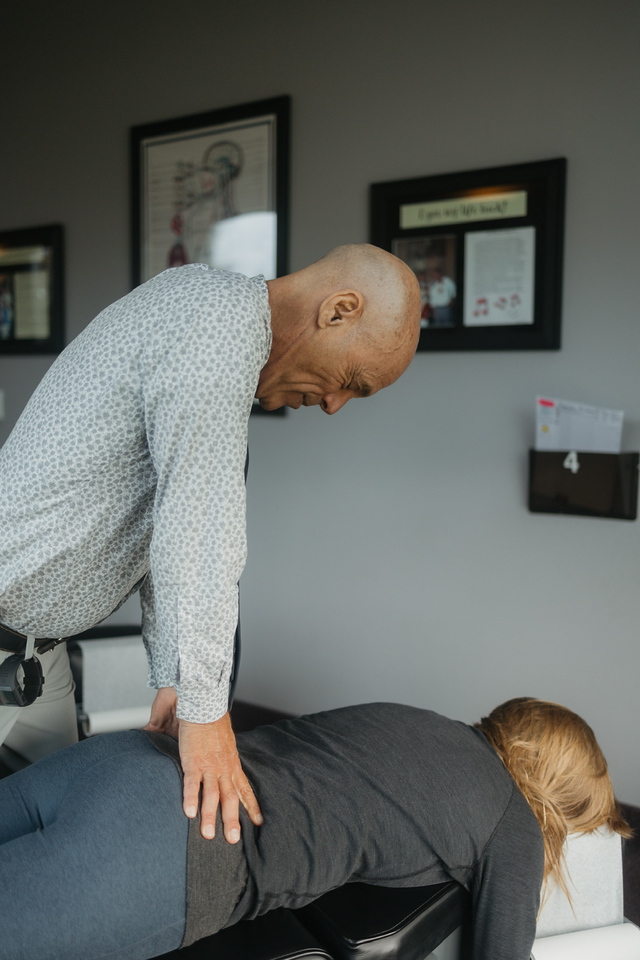
This one looks nothing like the chiropractic people picture. There is no thrust and no sound. The patient lies face down on a table whose lower half moves, and the doctor guides that section through a slow, repeated cycle while holding a contact on the spine.
What Flexion Distraction Technique Newport Beach patients experience
The movement is gentle and rhythmic — the lower half of the table drops and returns, flexing the low back a small amount each time. Most people find it comfortable enough that the difficulty is staying alert rather than tolerating it.
Flexion Distraction Technique Newport Beach patients get here is applied in sets over several minutes rather than as a single event, which is why the visit feels more like a treatment than an adjustment.
The mechanical idea
Flexing the segment while applying traction opens the space at the back of the disc and reduces pressure inside it. For a disc that is bulging backwards into the space where a nerve root sits, that change in pressure is the point of the exercise.
What it is used for
Disc-related low back pain, sciatica and leg symptoms that follow a nerve path, spinal stenosis where extension makes things worse, and facet irritation that will not settle with adjusting alone. It is also a reasonable option where a manual thrust is contraindicated.
What it does not do
It does not put a disc back. That phrase gets used loosely and it is not an accurate description of what happens. What it does is unload a segment and improve how it moves, which for many people reduces the symptoms enough to let the tissue settle.
How a course usually runs
Disc problems are slow. A course typically runs over several weeks with visits close together at first, and progress is judged by where the symptoms are — leg pain retreating towards the back is the change we watch for, and it usually comes before the back itself feels better.