
Spinal Stenosis Treatment Newport Beach
What we track
- How far you can walk before symptoms
- What position relieves them
- Stenosis or vascular — they mimic each other
- Whether walking distance is improving
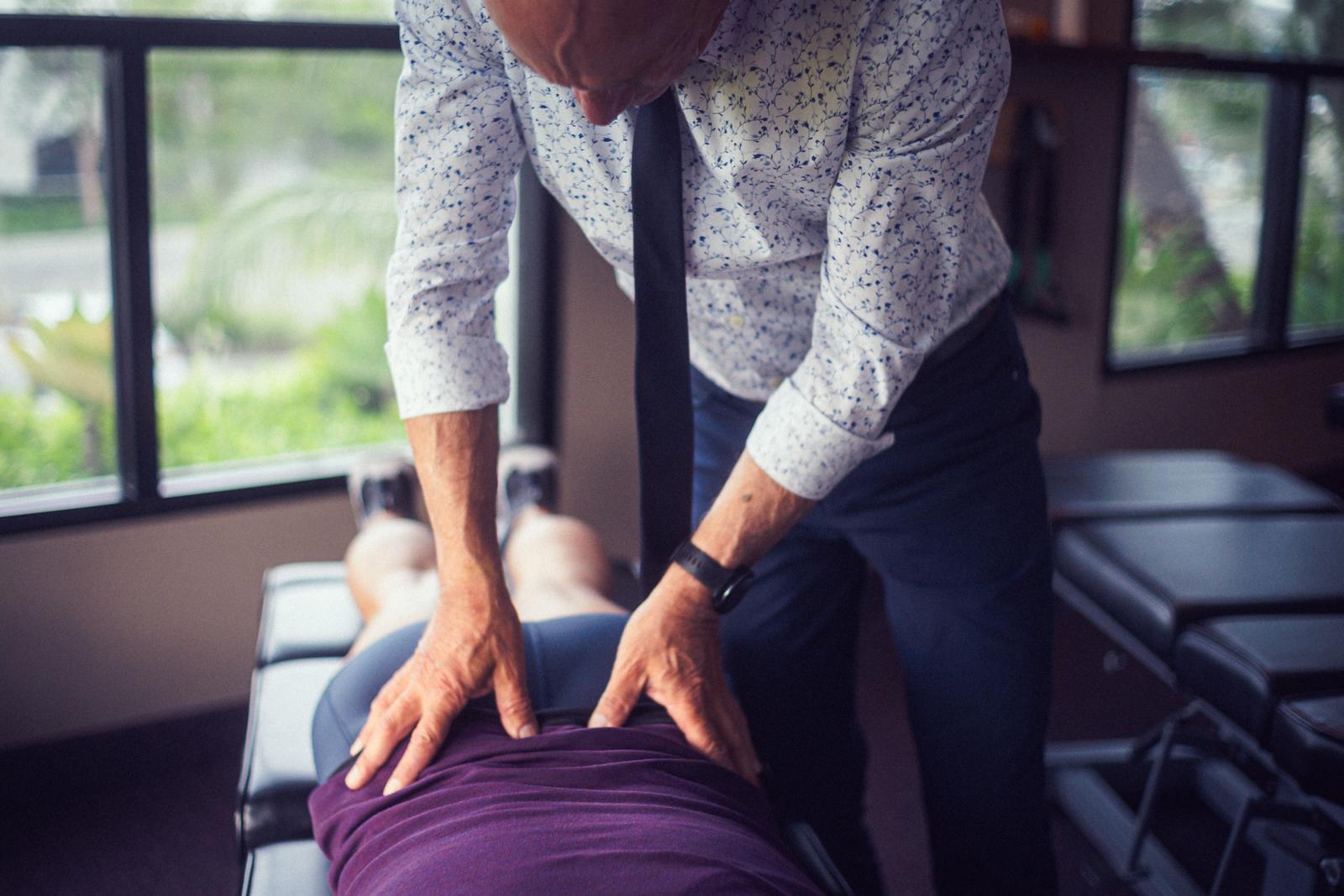
Stenosis means the space the spinal cord and nerve roots pass through has narrowed. It develops slowly with age, and the pattern it produces is distinctive: symptoms that build as you walk and settle within minutes of sitting down or leaning forward on a trolley.
What Spinal Stenosis Treatment Newport Beach focuses on
Improving what movement remains and reducing what provokes the narrowing. Leaning back closes the space further, so a good deal of the work is about flexion-based movement, unloading the segment, and addressing the hips and mid-back so the low back is not forced into extension to compensate.
What the examination looks for
How far you can walk before symptoms start, what relieves them, and whether the picture is genuinely stenosis or vascular claudication, which produces a similar story and needs a different specialist. Spinal Stenosis Treatment Newport Beach patients get here starts by separating those two.
Living with it well
Stenosis is structural and conservative care does not reverse the narrowing. What it can do is improve mobility, reduce the irritation, and increase how far you can walk before symptoms start — which for most people is the measure that matters.
We track walking distance rather than pain scores, because it is the honest measure of whether anything is working.
When to consider surgery
When walking distance keeps falling despite a proper course of care, when weakness develops, or when the limitation has taken away things you are not willing to give up. That is a conversation with a surgeon, and we will help you get to the right one rather than keep treating.
Staying active with it
The instinct is to walk less because walking brings the symptoms on. That is understandable and it makes things worse over months, because conditioning falls and the distance shrinks further. Better to walk in shorter bouts with planned sitting breaks, or to use a bike, where the forward-leaning position opens the space and most people manage far longer.