
Drop Table Technique Newport Beach
Where this technique fits
- Pelvis and sacroiliac joints
- Patients for whom positioning is the painful part
- Larger frames, where a manual thrust is awkward
- Joints that keep returning to the same restriction
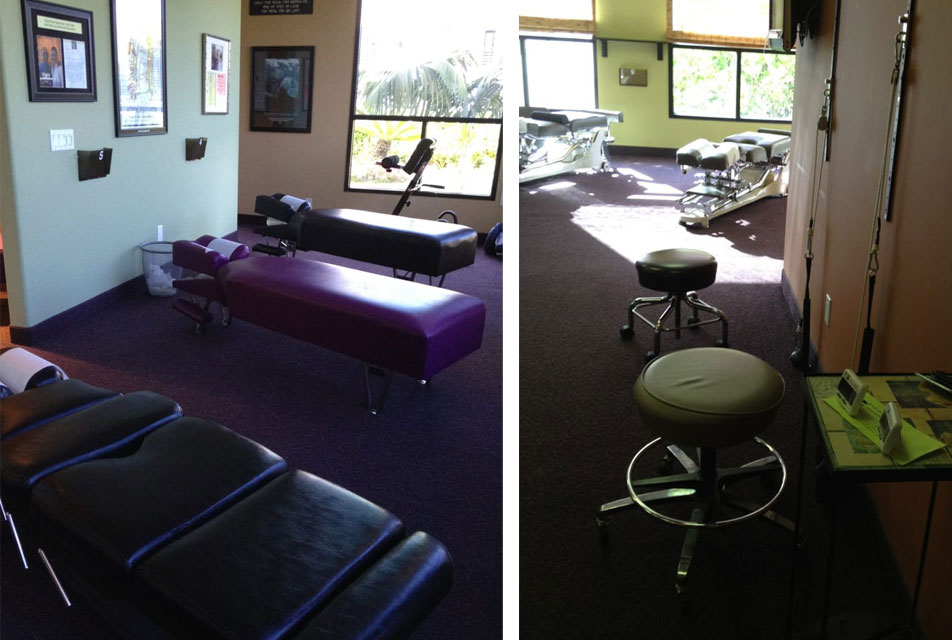
The table does part of the work. Sections of it are set to hold a small amount of tension and then release and drop a short distance — a centimetre or so — the moment the doctor applies pressure through the contact.
What Drop Table Technique Newport Beach patients notice first
Most people notice the sound before anything else: a firm mechanical clunk as the section releases. It is louder than the adjustment feels, which catches people out on the first visit and stops being remarkable by the second.
Drop Table Technique Newport Beach patients receive is often described as less forceful than a manual thrust, because the drop supplies the momentum rather than the doctor's hands. What you feel is pressure and a sudden give, not a twist.
Why it is easier on some patients
Because the table absorbs and redirects the energy, the adjustment does not require you to be rotated or bent into position first. That matters for larger patients, for anyone with a hip or shoulder that will not tolerate positioning, and for people in enough acute pain that being moved is the worst part of the visit.
What the table is doing
The tension on each section is set to the patient. Too little and the section drops before the thrust does anything useful; too much and the point of using it is lost. Getting that setting right is most of the skill in the technique.
Where it works well
Pelvis and sacroiliac joints particularly, along with the mid-back and the lower cervical spine. It is also useful where a manual adjustment has been tried and the joint keeps returning to the same restriction.
When we reach for it
We use it where the examination calls for a specific adjustment but a manual thrust is either unsuitable or unwelcome, and frequently alongside other methods in the same visit rather than instead of them.