
Sciatica Treatment Newport Beach
What we work out first
- Whether it is disc, joint, canal or muscle
- Which movements provoke it
- Strength, reflexes and sensation
- Whether the symptoms are retreating
Sciatica is a description, not a diagnosis. It means pain following the path of the sciatic nerve — buttock, back of thigh, sometimes past the knee into the calf or foot. The useful question is what is irritating that nerve, because the answer changes the treatment.
How Sciatica Treatment Newport Beach begins
Usually a disc pressing on a nerve root in the low back, but not always. It can be the joint at the back of the spine, a narrowing of the space the nerve passes through, or the nerve being compressed by muscle deeper in the buttock. Each behaves differently and each responds to different things.
Which one you have
The pattern tells us most of it. Whether bending forward or leaning back makes it worse, whether sitting or standing is harder, whether coughing sends it down the leg. We add tests that load the nerve specifically, and a neurological screen of strength, reflexes and sensation.
Progress, and how to tell
The change we watch for is not the pain getting smaller — it is the pain retreating. Symptoms that pull back from the foot to the calf, then to the thigh, then to the back, are improving even if the back itself feels no better yet. That usually happens before you notice much difference sitting still.
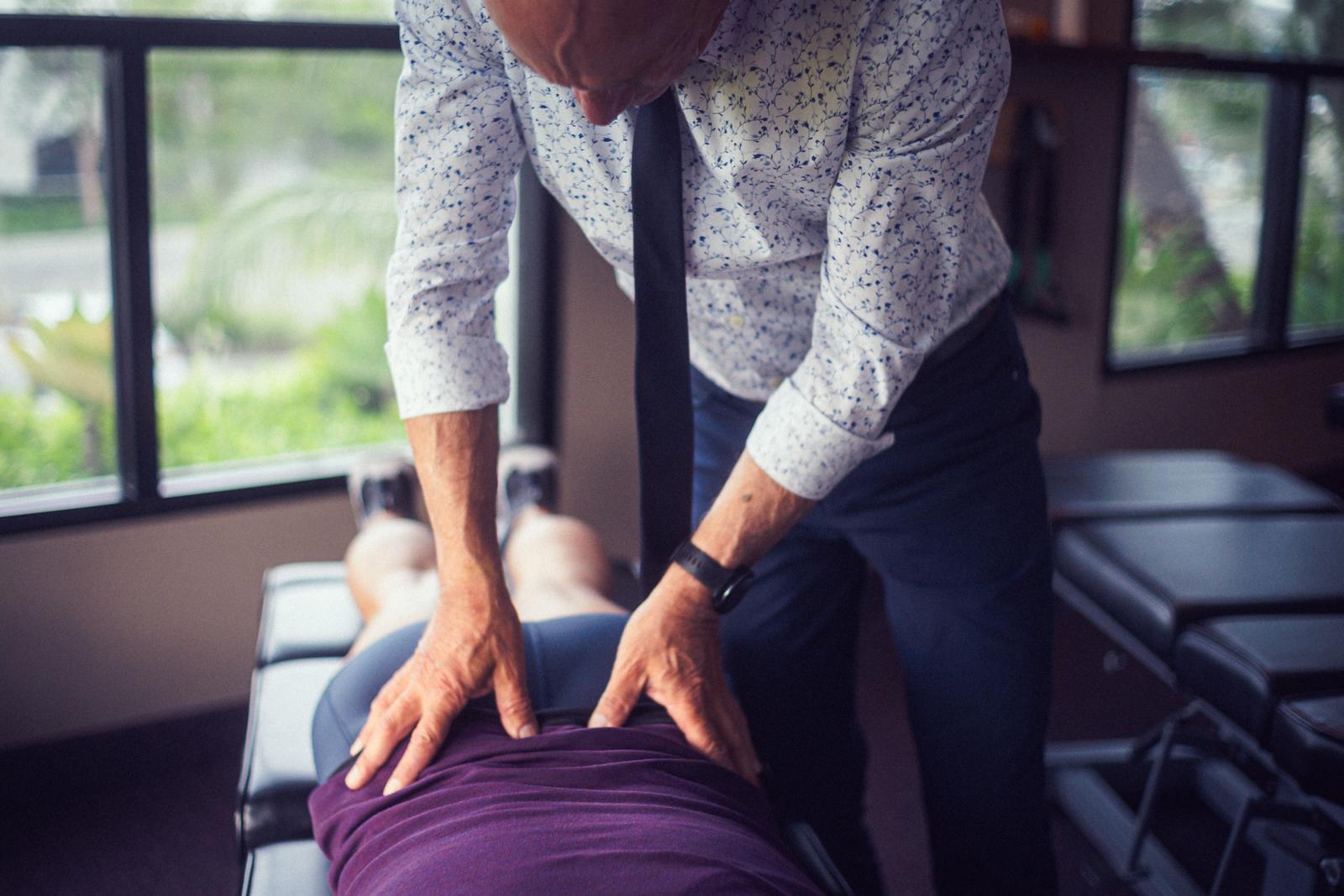
Sciatica Treatment Newport Beach patients get here often combines adjusting with flexion-distraction or decompression, because unloading the segment is what gives the nerve room.
The line we watch
Progressive weakness in the leg, numbness in the saddle area, or any change in bladder or bowel control means stop and be seen urgently. Those are rare, and they are the reason we ask.
What makes it worse in the meantime
Prolonged sitting is usually the worst thing for a disc-related sciatica, and long car journeys are the classic setback. Standing and walking are generally better tolerated. If bending forward reproduces the leg pain sharply, avoid loaded bending until it settles rather than pushing through it. These are general patterns and yours may differ, which is what the examination is for.